
Hydraulic breakers are vital attachments for skid steer loaders used in demolition, concrete breaking, trenching, and rock excavation. Maintaining these powerful tools ensures peak performance and long service life while reducing downtime on the jobsite. In this guide, we will explain you through essential maintenance steps for hydraulic breakers on skid steers, practical tips, and reasons why regular care matters.
Keeping a hydraulic breaker in good condition begins before every shift. Since skid steer loaders often operate in dusty, abrasive environments, contaminants can quickly wear down components such as bushings, tool pins, and hydraulic hoses. Therefore, daily maintenance is the single most important practice for preventing wear and costly repairs.
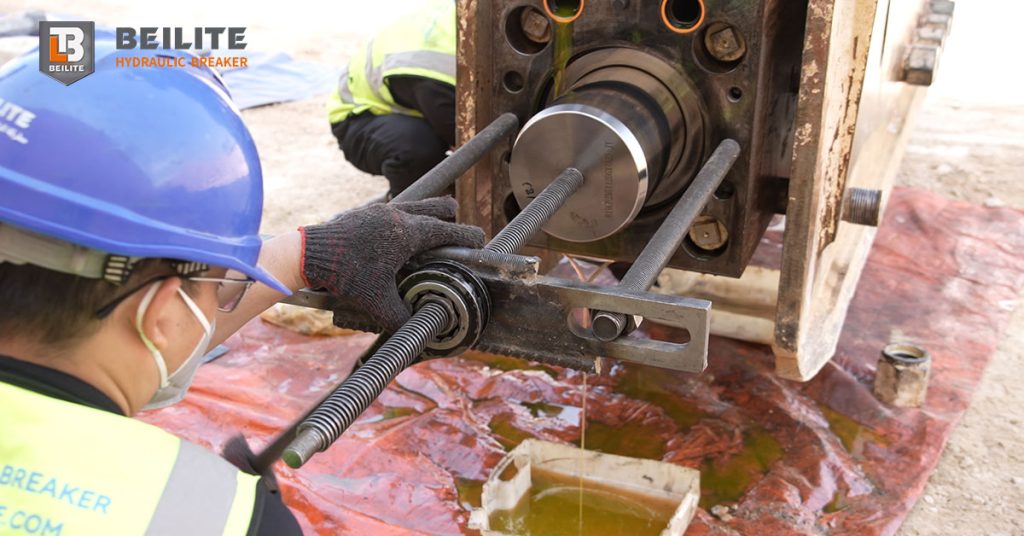
Daily Visual Inspection of Hydraulic Breakers
Start every workday with a visual check of the hydraulic breaker. Walk around the tool and inspect for signs of damage or wear. Look for:
- Cracks or mushrooming on the working tool
- Loose bolts on the hydraulic breaker’s mounting bracket
- Hydraulic oil leaks around hose connections
- Abrasion marks or cuts on hoses
- Wear or play in pins and bushings
Any visible damage should be addressed immediately to prevent larger failures that can take the equipment out of service.
Lubricate Regularly Hydraulic Hammers
Lubrication is a core maintenance task that protects internal parts and reduces friction. For breakers mounted on skid steers, the lubrication frequency should be higher than excavator applications because of increased contamination exposure.
We recommend you read this blog for hydraulic breakers maintenance
Use a high-temperature chisel grease or paste applied to the tool and bushing contact points every 2 hours to 4 hours of operation, or more often in harsh conditions. This helps:
- Reduce metal-on-metal wear
- Prevent premature bushing failure
- Extend tool and piston life
When possible, use an automatic grease system to ensure consistent lubrication and reduce the risk of operator oversight.
Check Hydraulic Hoses and Connections
Hydraulic hoses deliver fluid from the skid steer’s auxiliary circuit to the rock breaker. If hoses are worn, leaking, kinked, or incorrectly routed, they can impair performance and damage internal components.
- Ensure hose length allows full movement of the rock breaker
- Check for rubbing points that cause abrasion
- Tighten fittings to manufacturer torque specifications
Proper routing and secure fittings are especially critical on skid steers, as compact layouts and frequent repositioning can expose hoses to quick wear.
Monitor Nitrogen Pressure of the Rock Breakers
Many hydraulic breakers use an internal nitrogen chamber to optimize impact performance and return stroke cushioning. Over time, nitrogen pressure can drop, reducing the rock breaker’s impact force and increasing stress on seals.
Using a nitrogen charging kit or regulator, check and adjust the gas pressure according to the manufacturer’s specification for your model and operating conditions. Appropriate nitrogen pressure helps maintain consistent performance and protects internal components from shock and wear.
Replace Hydraulic Hammers Worn Parts Promptly
Components such as retainer pins, bushings, and tool points (moils, chisels, blunt tools) wear down over time. Regular inspection of these parts allows for timely replacement before excessive wear leads to performance loss or secondary damage.
When replacing parts:
- Choose manufacturer-recommended parts
- Record wear patterns to identify trending issues
- Inspect nitrogen seals and accumulator as part of routine checks
- Matching the correct tool point to the task also reduces wear and enhances performance. For instance, blunt tools excel in heavy concrete breaking while chisel points offer precision in trenching.
Clean Hydraulic Breaker After Each Use
Skid steer loaders frequently work at ground level where dirt, debris, and dust are abundant. After each shift, clean the breaker’s exterior and contact areas using compressed air or water (taking care not to damage seals). Removing debris prevents buildup that can interfere with lubrication, hose movement, and component function.
Monitor Operating Conditions
Hydraulic breakers mounted on skid steer loaders generate heat and strain during extended periods of use. Operators should watch for:
- Abnormal vibration or noise
- Excessive heat in hydraulic circuits
- Reduced impact force
- Visible leaks from fittings or seals
Stopping operation when abnormalities arise protects both the breaker and skid steer loader from further damage.
Long-Term Maintenance Planning
Daily and weekly checks are critical, but long-term care also matters. Maintain a schedule for:
- Grease hydraulic breakers (daily)
- Nitrogen pressure verification (weekly)
- Bushing and pin life measurement (monthly)
- Seal and accumulator inspection (monthly)
- Full hydraulic system inspection (quarterly)
Document maintenance activities to track part life cycles and anticipate replacements before failures occur.
FAQs
1. How often should I grease my hydraulic breaker on a skid steer?
Hydraulic breakers on skid steers often require lubrication every 2 to 4 hours of operation. In dusty or heavy-use jobs, more frequent greasing helps extend component life.
2. What causes a hydraulic breaker to lose impact force?
Loss of impact force can be due to low nitrogen pressure, hydraulic leaks, worn tool points, or improper oil flow. Regular checks of nitrogen charge and hoses help prevent power loss.
3. Should I clean my hydraulic breaker daily?
Yes. Cleaning after each use removes debris that can affect lubrication, seals, and hose integrity, especially in ground-level skid steer operations.
Beilite Official Contacts
Beilite Machinery Co., Ltd.
40008-40008
+6282321982255
 English
  Arabic